By DJ Cence
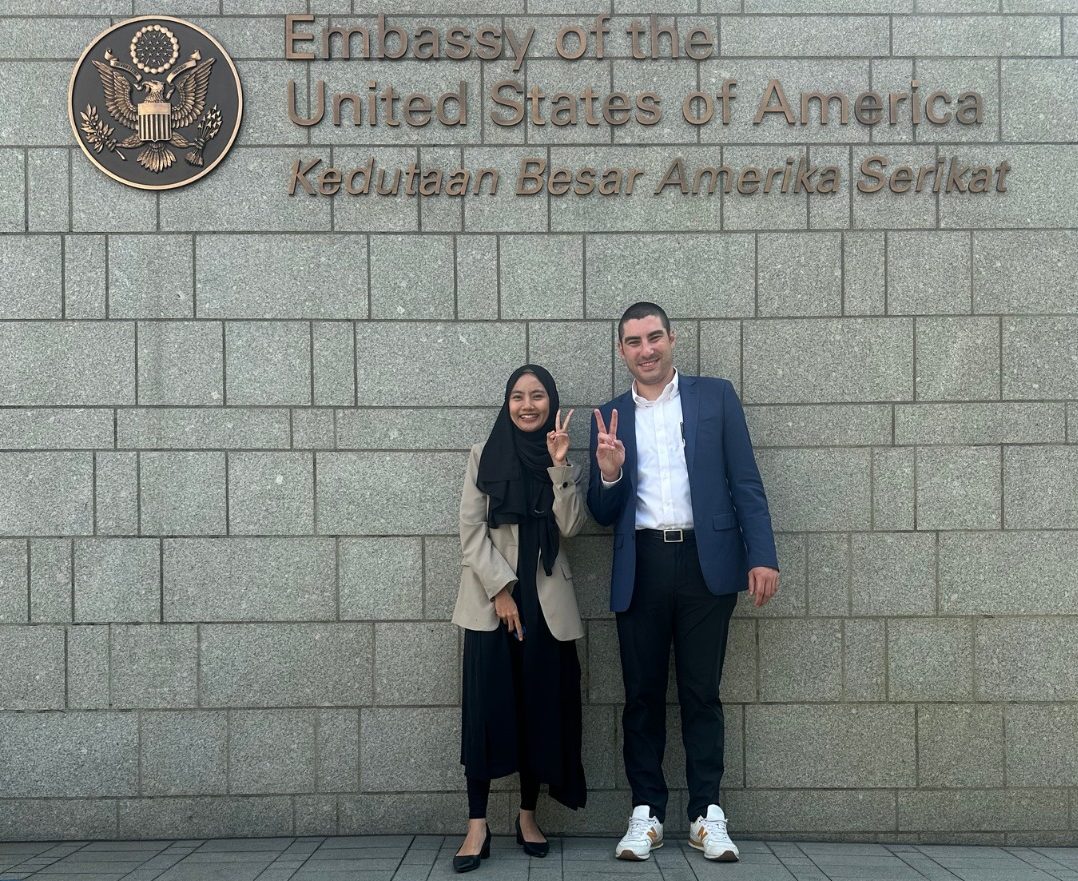
Earlier this year I had the opportunity to partake in a reciprocal exchange program run by the American Council of Young Political Leaders (ACYPL). ACYPL works with YSEALI, a program by the U.S. State Department.
The goal of the program is to connect professionals from Southeast Asia with U.S. organizations. This connection is for a month-long internship. Issues Management Group was considered for this opportunity due to our connected network in the Massachusetts State House and our trusted reputation for developing professionals.
Developing the Project
In October, Issues Management Group hosted a young woman from Jakarta, Indonesia. She works in the Fiscal Balance branch of the Indonesian Ministry of Finance. While in Boston, she learned about the U.S. government and the Massachusetts state government. She also gained experience in strategic communications from me and my colleagues.
While at IMG, we collaborated to make presentations for the Ministry of Finance. The presentations focused on enhancing communication with Jakarta’s regional governments. We also developed presentations to universities and young professional groups focused on communications tips.
The Language Barrier
In June, I embarked on the 26-hour trip to Jakarta to begin our series of presentations. During my two-week stay, I encountered several barriers that made the execution of our project more challenging. First, and most prominent, was language. The primary language of the country is known as Bahasa Indonesian, with each region having an alternative tribal language spoken by its residents. A majority of the younger population spoke English to some extent (driven by use of western social media platforms in the country), however many older professionals struggled to communicate with me due to their inexperience using English.
My efforts to overcome this came through patience and preparation, practicing my pacing at a slower rate than I would with a native English speaker. I made sure to avoid using informal language, short forms, and acronyms when speaking. I also made sure to speak formally and avoid using slang, abbreviations, and acronyms. This is important for all presentations, especially when speaking to non-native English speakers. In doing so, I was able to reduce the likelihood that my message would be lost in translation.
The Cultural Barrier
Another significant barrier I faced was the cultural differences. In English, we use titles like “Mr.” to show respect. But in Indonesian culture, there are many terms for different ages, jobs, and genders that don’t have direct translations. To address this, I researched proper greetings for people in power and appropriate terms to use when talking about them. I did this alone and talked to my project partner.
Additionally, Indonesia is a predominantly Muslim country, and many people utilize a mosque or prayer room five times a day for prayer. As a presenter, it is important to be conscious of both when you speak and for how long to avoid disrupting the audience’s daily rituals and obligations elsewhere. Being informed of prayer times each day allowed me to be conscious of my audience’s needs. In some instances, I implemented a firm wrap up time but on other occasions, I inserted breaks into my presentation to allow participants to leave and return when ready.
The Governmental Barrier
I faced a final challenge before providing information on U.S. lobbying rules to the government of Jakarta and Indonesia. This information would assist them in creating their own rules for lobbying in their country. In Indonesia, the government is structured differently from the U.S. They have a parliamentary system with ministries that have bureaucratic power. This is unlike the republic system in the U.S., which presented a challenge to explain how to implement our regulations there.
To better understand these structures and processes, I read up on the history and government of Indonesia and prepared several clarifying questions to make sure I fully understood what I was providing recommendations for. By being confident, prepared, and asking questions, I overcame unfamiliarity and communicated my experiences and recommendations clearly and effectively.
During my time in Indonesia, I faced many challenges that forced me to think outside the box and find solutions. When traveling internationally – or even giving a presentation in your office – you will most certainly encounter barriers to effective communication. It is critical to ensure you are patient, prepared, and confident to deliver your message clearly and concisely.