By Lauren Durniak

The Power of Public Art
If you’ve been in Downtown Boston recently, odds are you’ve seen some new friendly faces – six of them to be exact. Amidst the dreary, grey winter days, a collection of bubble gum pink inflatable men has sprung up around various office buildings to brighten the scenery. The new inflatable sculptures, dubbed Monsieur Rose (Mr. Pink) are part of Downtown Boston Alliance’s annual outdoor winter art exhibition, “Winteractive.”
Kicking off its second year, Winteractive is a “free, walkable art experience” with more than 15 artworks and interactive installations inspired by Québec’s vibrant winter festivals and art exhibitions.
Although Winteractive has only been up for a few weeks, it has already garnered quite a social media presence, sparking interest from curious locals and tourists, luring them downtown to take a peek at these “pink men,” the satellite crash, or “living” statue.
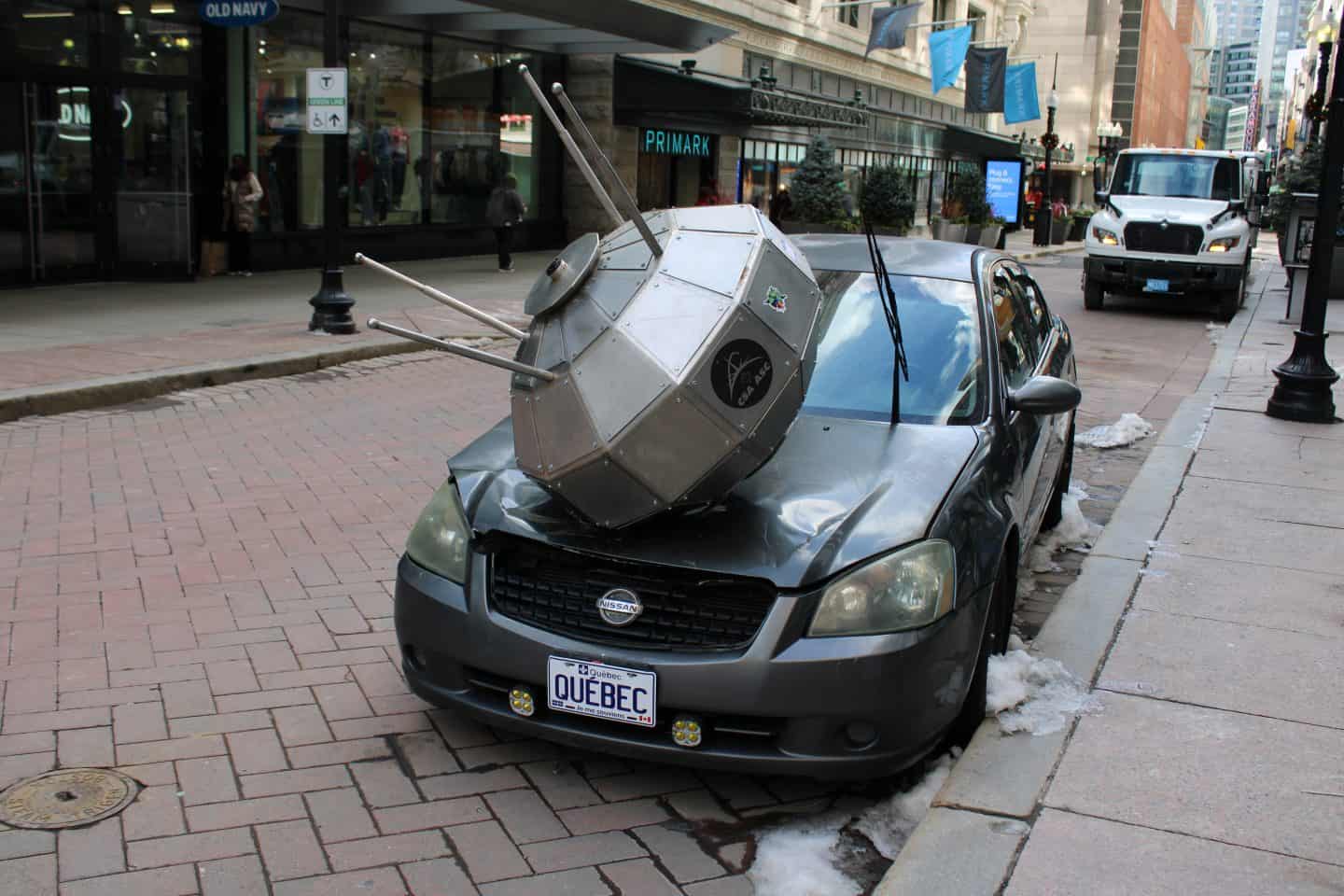
While eye-catching, and provocative to some, these installations, and public art in general, do much more than spark joy and curiosity; they can have tangible community and economic impacts worth highlighting.
Beacon for Tourism
Like museums and landmarks, public art serves as an attraction. Public art installations are often centrally located, drawing in tourists and residents alike, which is one of Winteractive’s main goals. Iconic public artworks also serve a major role in placemaking and the public’s general perception of a city.
Cities across the US draw in large groups of visitors each year to see works like Chicago’s Cloud Gate (“The Bean”), which attracts between 5 million visitors annually.
Although Boston doesn’t have a signature or world-famous art installation, the recently unveiled, and somewhat controversial, statue “The Embrace,” is beginning to draw even more tourists to the city’s iconic Boston Common, and was included in The New York Times’ guide on how to spend a day in Boston. Cities with innovative and eye-catching public art installations have an edge to make them stand out, creating a unique identity while boosting the economic benefits of tourism.
Hyperlocal Economy Boost
As tourists flock to areas with public art installations, you inevitably increase the opportunities to interact with the surrounding environment, which can boost the hyperlocal economy. Increased foot traffic translates to increased patronage of coffee shops, diners, and corner stores, among others.
Miami’s Wynwood Walls is a great case study of the economic impact public art can have on a community. In 2009, Tony Goldman, founder of real estate firm Goldman Properties, established the rotating street art collection as a method to revitalize the Wynwood neighborhood. The murals are a major contributor to tourism in the area, which increased from 600,000 annual visitors in 2013, to over fifteen million in 2023.
This boost in tourism served well for local businesses, with 400 new businesses opening in the district within the past 10 years. The area has also provided the city with major tax revenue, increasing from $741,606 in 2013 to $21.66 million in 2022. Although the open-air street art gallery now requires tickets as of January 2021, it was free of charge for over 10 years, and there are still dozens of other murals open to the public in the neighborhood.
The transformation from what used to be an area filled with empty warehouses, to an artistic and economic hub highlights how investment in public art can attract businesses and generate substantial revenue for a city.
In Boston, we’ve also started to see local retail and food and beverage pop-ups appear surrounding public art including Trillium Brewing’s summer spot on the Rose F. Kennedy Greenway, and Harpoon Brewing’s outdoor beer garden near The Embrace. This provides small businesses without brick-and-mortar storefronts to take advantage of crowds surrounding installations and provides visitors with a reason to stick around for longer.
Creation of “Third Spaces”
Individuals inhabit multiple “spaces” within their lives – the home being the first, the second being the workplace, and the third being a community-oriented space. Areas that are considered “third spaces” include playgrounds, beaches, boardwalks, public markets, and now, public art. Third spaces are essential to creating social connectedness and stronger communities, yet third spaces in America are dwindling, and individuals are feeling more disconnected than ever (21 percent of adults in the US acknowledge/report feeling lonely).
Public art offers an easily accessible third space for individuals, which is essential in a society where they are few and far between. Public art is often centered around parks or spaces where people can gather.
This also assists in “placemaking.” Dewey Square, for example, was created as a by-product of the Big Dig, which moved multiple lanes of surface-level highways underground and created a series of ground-level public spaces. The addition of public art in the space made Dewey Square more than just an ordinary traffic square, it became a unique destination and an identifiable meeting space through a series of rotating sculptures and murals.
Beyond the Canvas
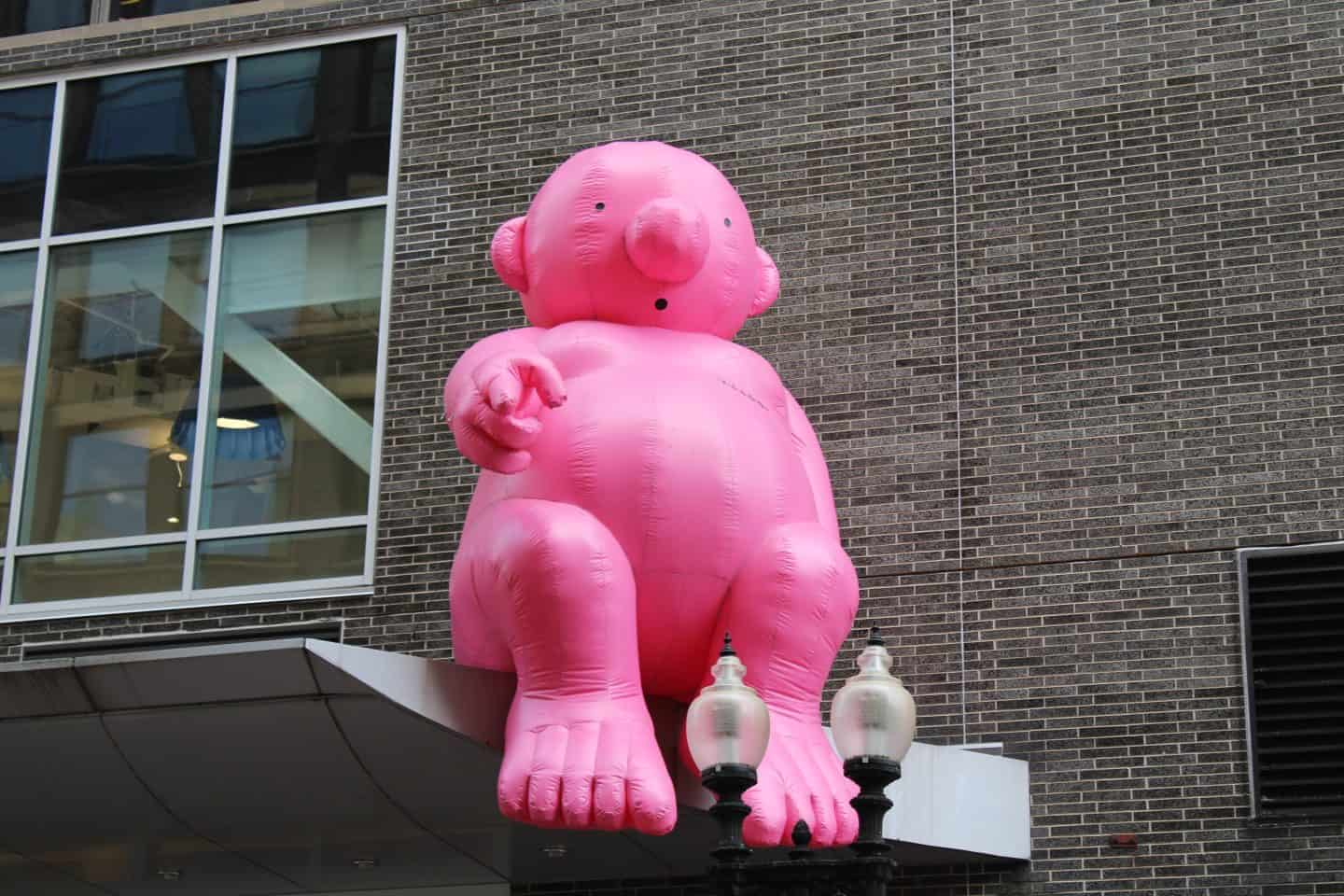
Winteractive and other public art activations demonstrate the profound impact that creative installations can have on a city’s economic, social, and cultural landscape. Through creating accessible, vibrant experiences, Winteractive not only brightens the winter season; it illustrates Boston’s work to be known as a city that values both creativity and community.
Make sure you take time to enjoy these eye-catching installations before the activation wraps up on March 30 (my personal favorite is Mr. Pink 6, located just outside IMG’s Boston office).