By Isabelle Montez
In the post-2020 world, companies have grappled with different approaches to revive the in-office environment that was virtually universal until just a few years ago.
Despite outlining firm return-to-office policies, numerous companies have experienced little to no change to in-office attendance numbers. As a result, we have seen a pivot, from mandate to magnet.
Rethinking the office
Demands for office space have shifted with societal changes to behaviors and expectations. The traditional attributes of alluring office space (e.g., location, connection to transit, parking access, and operationally-focused amenities, like security) evolved with the internet age. Telecom connectivity and energy efficiency ratings rose to become key features in the most in-demand properties.
Now, with companies focused on enticing workers to come into the office, amenities have become the new fixation. Offerings that make the office feel more like home, with a focus on relaxation, rejuvenation, and personal space, whether outside or in a communal area, reflect today’s demands.
After years of employees settling into the comforts and flexibility of remote work, companies have had to get creative and find ways to motivate employees to commute to, and be present in, the office. This has given rise to the “Destination Workplace.”
A destination workplace goes beyond a typical office with fluorescent lights, ordinary desk chairs, and a cubicle limiting collaboration with colleagues; it is a space to invite collaboration, functionality, and comfort. Some of the top building leases of 2025 in Boston highlight the high-end amenities that drew the biggest tenants to their building.
KKR
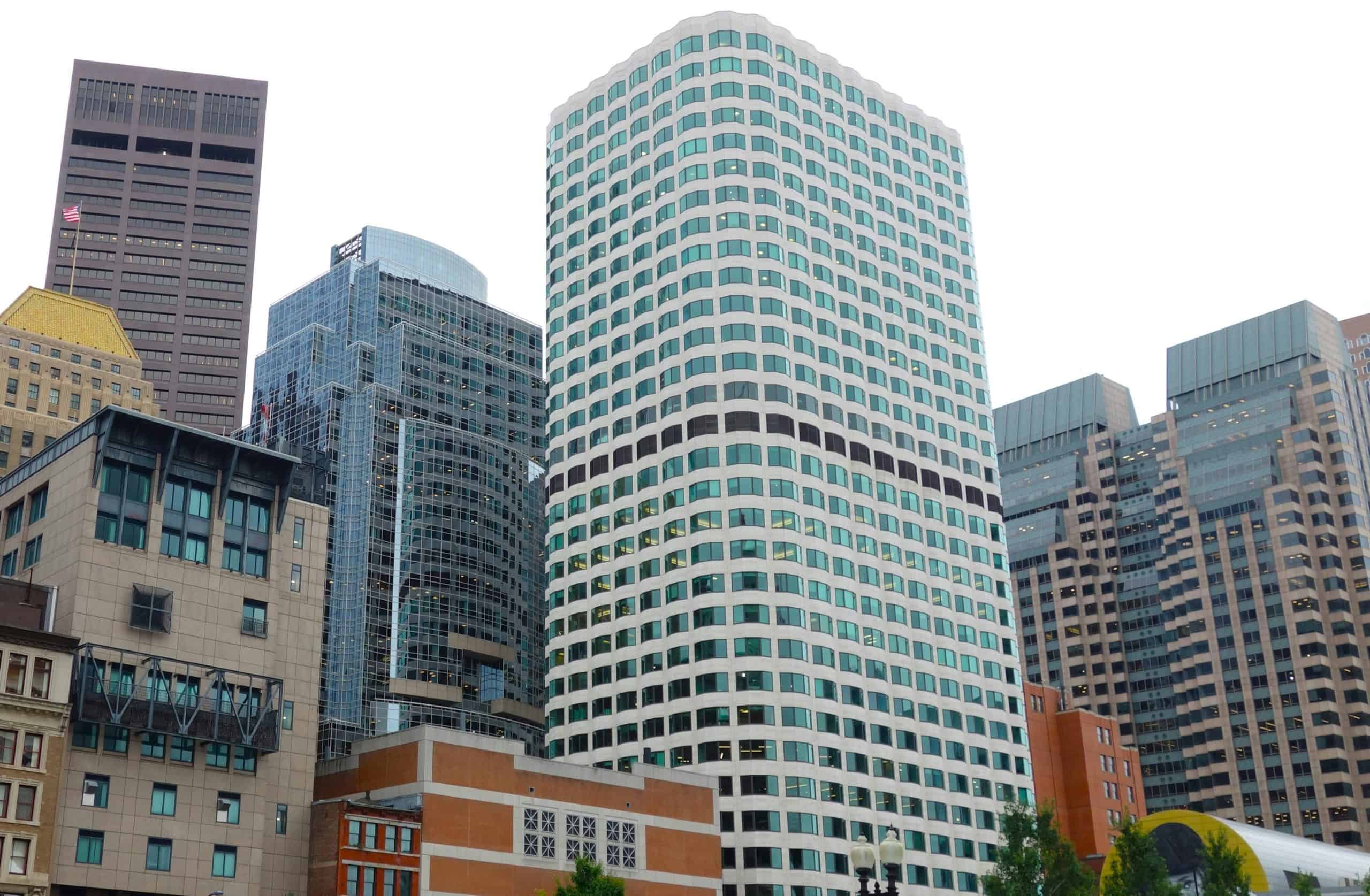
Boston’s fourth-largest lease in 2025 features one of the most amenity-heavy office properties in the city. KKR signed a 15-year, 132,000 square-foot lease at International Place, owned by The Chiofaro Company. Notably, this lease comes on the heels of a $100 million reinvestment by ownership intended to attract tenants with the promise of a world-class office experience.
The reinvestment included a redesign for the building’s atrium, which was upgraded with greenery to create a more urban garden feel, and complemented the existing multi-story water feature. It also included the development of Aries Club, an exclusive, tenant-only space with a bar, outdoor terrace, catering kitchen, and multi-purpose room with event programming. The space offers tenant-exclusive opportunities for connection events and networking.
Hasbro
Boston’s largest lease in 2025 was highlighted as a remarkable feat, relocating Hasbro from Rhode Island to Seaport. Hasbro represents the latest in out-of-state companies relocating to Massachusetts in recent years, which also includes Lego, JDE Peet (following its acquisition by Keurig Dr Pepper), and General Electric.
Hasbro’s new headquarters, located at 400 Summer Street in Seaport, is owned by WS Development. While the building amenities for 400 Summer Street include more practical elements, such as a daycare center, they reflect growing tenant demands that cater to convenience, especially out-of-office responsibilities that can clash with in-office expectations. Offering easy access to childcare continues to be a priority for working parents. Employers cited that childcare benefits have a positive impact on talent recruitment, retention, and productivity.
Around 400 Summer Street, WS Development has created an environment where the Seaport district itself functions as an extension of office amenities. Employees benefit from nearby Blue Bike stations, green spaces, and plenty of in-demand, destination-style shops and eateries, amenities that go beyond what a single building can offer. This elevates the area beyond a typical office district.
Beyond Boston
The fixation on building amenities is not limited to Massachusetts. JPMorganChase recently unveiled its $3 billion headquarters in New York at 270 Park Avenue. The building boasts net zero emissions and serves as the largest all-electric tower in New York. Uniquely, it also includes an app for employees to order food as well as a drone port for package deliveries.
Some developers are experimenting with features intended to directly support employee well-being, such as a 35-story building in Austin with a balcony on every floor, or a San Francisco office incorporating blue-enriched light, to help regulate workers’ circadian rhythms. Other office locations have introduced more niche and focused green spaces, such as urban beekeeping areas, with programs to teach and foster environments for employees who may want to explore a new hobby at their workplace.
What’s Next
With the introduction of remote work, the workforce and work culture evolved, so it stands to reason that the spaces in which work is done had to keep up. That change brought in a new set of demands and rethinking how work and personal lives can co-exist. As we move into 2026, we will continue to monitor the attraction of these trophy properties to reinvigorate in-office attendance.