By Julianne Hester
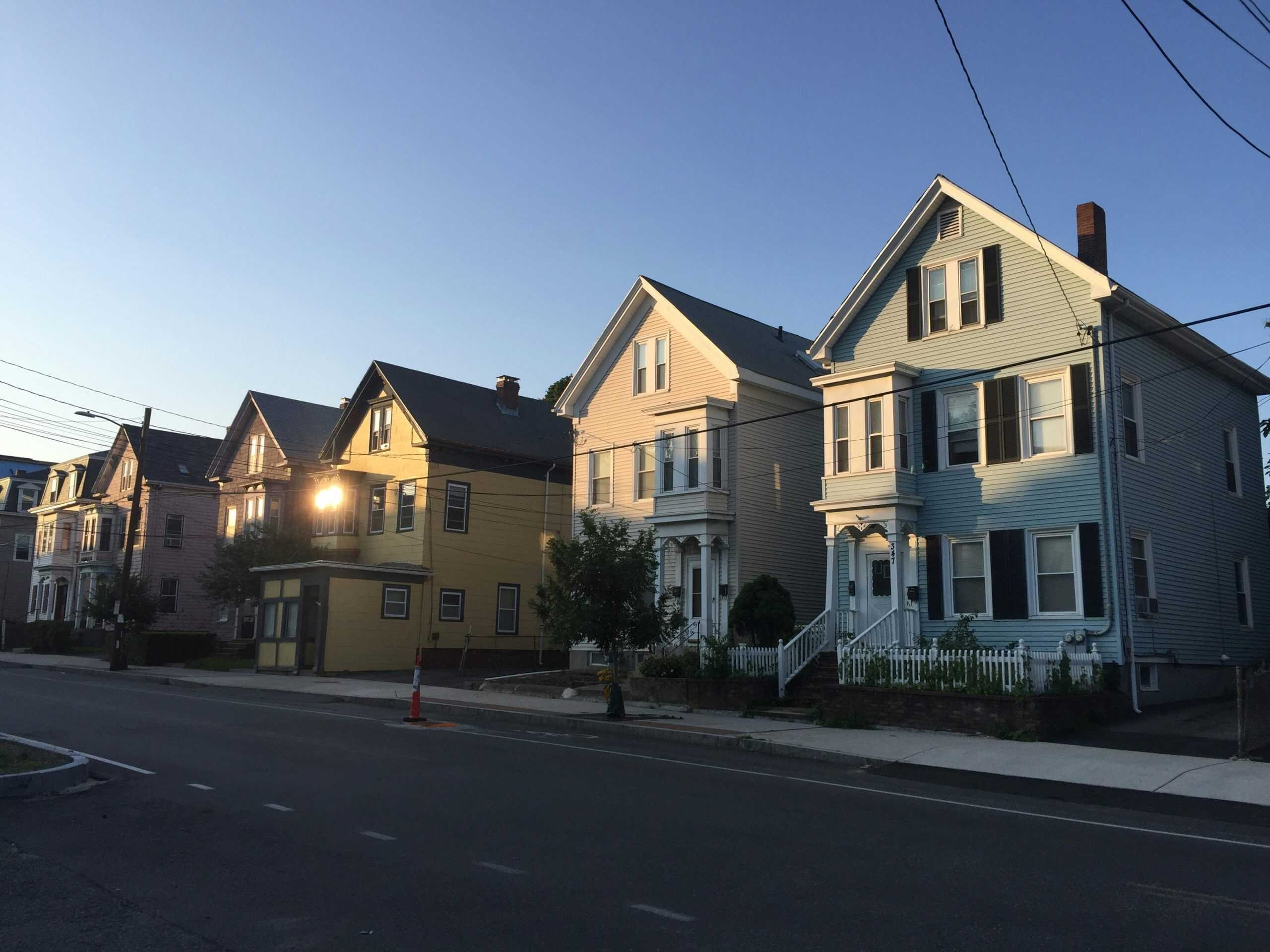
Members of IMG’s real estate team recently attended the Urban Land Institute’s (ULI) Boston chapter Building Density While Preserving Place event at MIT, a lively conversation on how municipalities can encourage development while preserving the character and history of their communities.
Moderated by Graffito’s Jesse Baerkahn, with a panel comprised of Tom Galligani, Director of Economic Development for the Somerville Redevelopment Authority, Michael Owu, Vice President of Real Estate at MIT Investment Management Co., and Watertown City Manager George Proakis, the discussion explored their experiences in their respective municipalities. The highly enjoyable discussion was rooted in real-world examples, illustrating complex theoretical ideas of placemaking in practice in local cities.
Here are three takeaways from the event.
Understanding the Community Feedback Process
Every new development project undergoes a community feedback process. Ensuring that community members feel heard is key to responsible development and also builds strong relationships between the developer and the community. Establishing that trust goes a long way, especially as financing challenges are leading to longer development timelines, often causing plan revisions.
Michael Owu shared valuable insights into how MITIMCo assesses whether a development will satisfy a community—and how to filter through the noise when feedback pours in.
Not all feedback is equal. Sometimes, the loudest voices aren’t the most representative. Most people are open-minded and want to see responsible development, and they are the most important to engage thoughtfully. Throughout the planning process, it’s important to identify who in the community will be opposed to any and all development and who is interested in providing valuable feedback to ensure that community needs and desires are met.
Taking the time to hear the community’s concerns and desires goes a long way in pursuing a development that everyone can be excited about. In the case of MITIMCo’s Kendall Square Initiative, community members expressed long-standing desires for a pharmacy and grocery store, two essentials that the neighborhood was formerly lacking. Through the development’s retail component, MITIMCo was able to deliver both a Brother’s Marketplace and a CVS to the heart of Kendall Square.
Communities, above all, want to feel heard, not just listened to. Even when a project moves forward despite opposition, having a process that acknowledges and respects community voices helps build trust. This is particularly relevant in Massachusetts, where preservation can often be used as a proxy for resisting development—especially when there may be little worth preserving.
Preservation vs. Redevelopment
In a region with as much history as New England has, there’s an important balance to strike between preserving the area’s past and charm, while also ensuring that communities are not frozen in time.
In Watertown, City Manager George Proakis outlined a thoughtful example of how to strike a balance between what to preserve and what to reimagine. The town’s planning efforts around MBTA zoning and the town square illustrated how existing character can be maintained while creating space for revitalization.
Preservation doesn’t mean freezing a neighborhood in time. It means identifying buildings and streetscapes that contribute to a town’s identity. While the town square was rezoned to allow for increased housing density, which will also entail urban planning adjustments with the streetscape reshaped, as well as the redevelopment of buildings that house vacant storefronts, the city determined that the buildings that shaped the character of the area should be preserved. One such example is the Watertown Savings Bank building at 60 Main Street, which is a landmark in the area.
Another case discussed at the event was Somerville’s Winter Hill neighborhood.
The Somerville community has been incredibly receptive to proposed redevelopment within the Winter Hill neighborhood, especially given the circumstances surrounding the underutilized land and empty grocery store, which has been vacant since 2007. While the proposal was viewed favorably by the community, the development team took the added time and effort to engage the community and came to learn that the abutting Winter Hill Liquor Mart was a valued piece of the neighborhood.
To get ahead of concerns over lost parking, the team carved out parking spaces for the retailer’s customers as a friendly gesture. Now, as the project is on hold in a challenging financing environment, there is still community goodwill because of how robust the community engagement process was.
Designing for the Future
Finally, Tom Galligani provided some context into the evolution of Somerville’s built environment, and where the city seeks to incorporate forward-thinking design. Once built to compete with the suburbs during the height of car-centric planning, parts of Somerville now need to transform to meet today’s urban demands.
For example, Assembly used to house low density, suburban sprawl, big box retailers like Kmart that catered to car-centric customers. In 1980, the Assembly Square Mall was built, and within less than 20 years, almost every store was closed. Beginning in the 2010s, Assembly Square began prioritizing density, with the development of walkable retail in Assembly Row, and new, high-rise apartment buildings.
The city’s current trajectory aims to surround people with vibrant, walkable city centers. That means more housing, higher density, and dynamic streetscapes that encourage interaction. It also means embracing architecture that is not only functional but welcoming and human-scaled.
Planning must look ahead—not just to what works now, but what will serve the next generation. That means laying the groundwork for inclusive, active, and connected neighborhoods. As the MBTA continues to improve under the leadership of Philip Eng, designing for the future means planning vibrant, walkable communities that don’t rely on cars.
Where We Go From Here
Massachusetts has a complex development processes and communities that are able to play an incredibly active role in shaping their built environment. With that comes both the challenge and privilege of shaping what comes next, and designing for an enduring future, rather than the next few years.
As the state continues to evolve, the key to successful redevelopment lies in honoring the character of each town while creating room for growth. With the increase in rezoning opportunities through the MBTA Communities Act, and state-wide housing crisis, positive examples of community engagement like these illustrate how Massachusetts can move forward. Events like ULI Boston’s panel offer a glimpse into how we can bridge the old and the new.